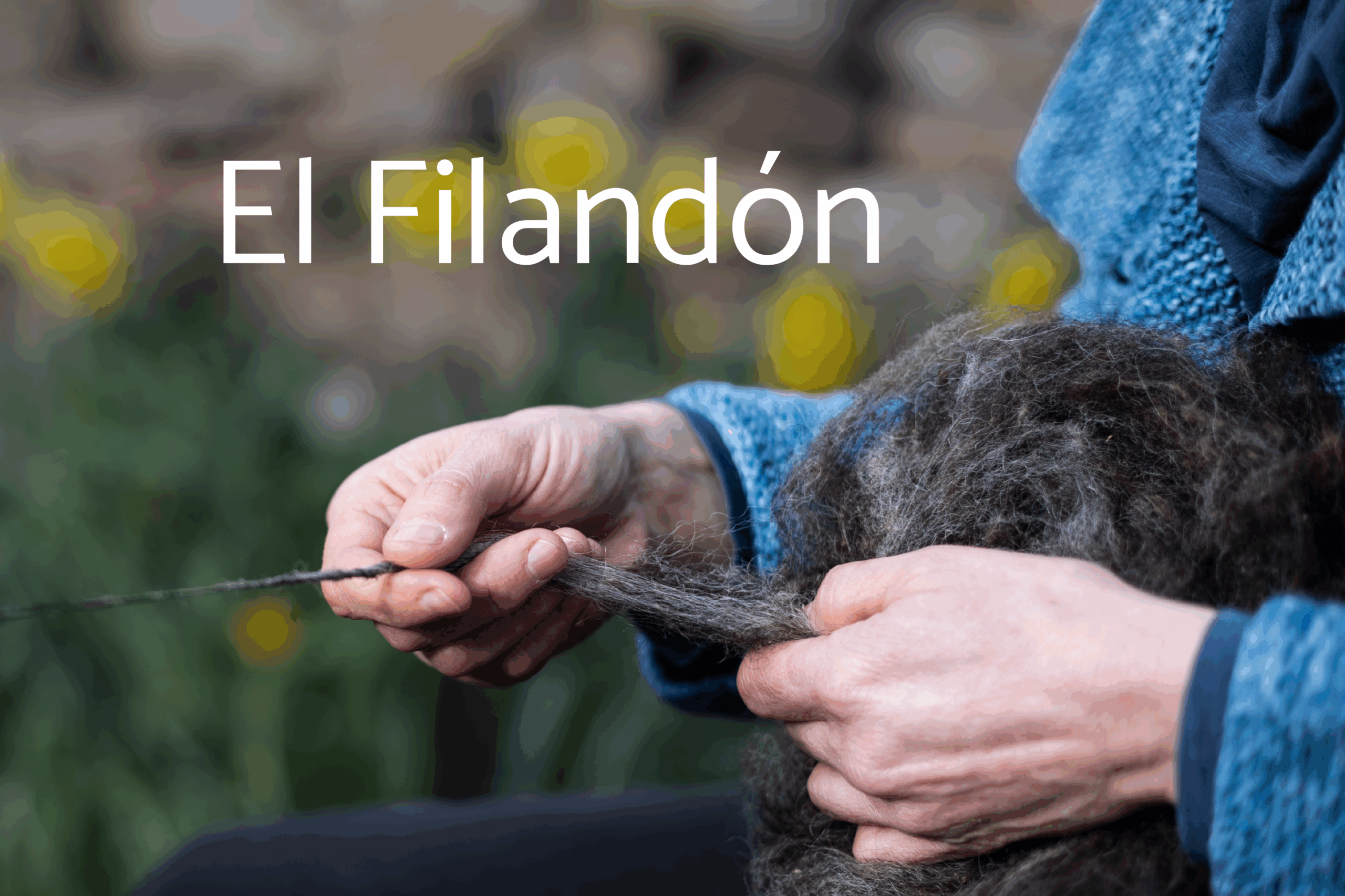
Paz Mesa comes up from the passion of enjoying and preserving a trade with tradition and centuries of history
It comes up too from the curiosity of keeping that ancient knowledge and know that despite of the pass of centuries, it continues to keep its raison d’être, reworking the tradition using contemporary designs, techniques and functionalities. A trade that is worth to protect and is by itself an historic heritage for us.
Paz Mesa tries to promote and spread responsible ways of consuming, gives priority to Asturian wool and other local wool varieties and/or coming from organic production, which affects directly over the territory in economic, cultural, environmental and social terms.
A life project
After more than 10 years training in different disciplines about textile craftwork, I decided to quit my job as a civil servant to work as traditional weaver using a loom. This is part of my way of understanding life, this is, living in close relation with the nature and implying a development of my job with the minimum carbon footprint, taking into account people, environment and animal welfare.
At the rural heart of Asturias
All within a territory full of history and culture that shapes my project’s landscape.
The workshop is located in the Asturian village of Puerma (Les Regueres), within an ethnographic ensemble and conformed by the house-workshop and three hórreos, which were moved, recovered and restored by our own hands.
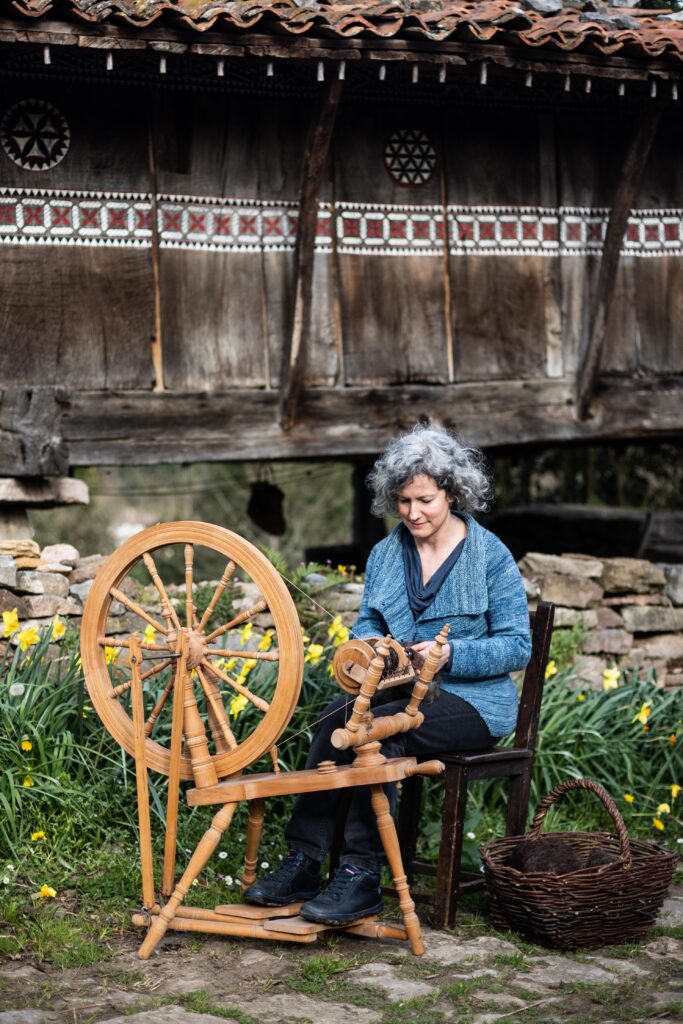
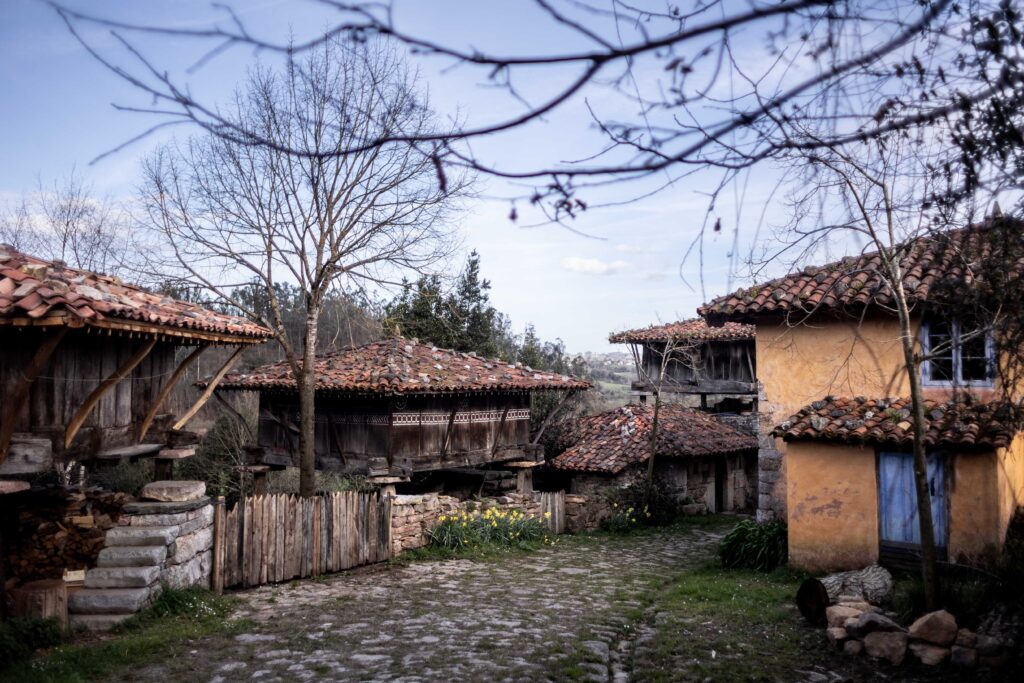
One of them was built in the XVIth century, with polychromies that took me several restauration working days recognized with the “Lliñu” award in its first edition during the year 2022.
Responsible production
I stand up for binding together textile creation not only with the elaboration process and the rentability, but also it should consider an ethic commitment.
Concepts as territoriality, health, animal welfare, sustainability, environmental ecology, sociology, culture and traceability are essential elements in this project.
I stand up for a sensible use that guarantees a decent working condition and minimize environmental impact and health impact. This entails a personal implication in a slow and sustainable production of timeless and long lasting pieces, in contrast with the overproduction by the textile industry who supports a changing fashion style year after year.
Awards and Recognitions
Over the past few years, my artisanal work has been recognized by various institutions that value the preservation of traditions, rural entrepreneurship, and innovation within the artisanal sector. These are some of the most significant awards I have received:
-
Finalist, National Craft Award – Entrepreneurship Category (2025)
National recognition highlighting projects that combine artisanal excellence, innovation, and commitment to the territory.
-
"Urogallo" Award – Asturian Center of Madrid (2025)
Distinction for promoting Asturian culture and craftsmanship, valuing the creativity and skilled hands of Asturian artisans.
-
"Verdes Valles Asturianos" Award – Marino Gutiérrez Suárez Foundation (2025)
Awarded for linking tradition and sustainability, this prize honors innovative work from Asturian rural roots, blending ancestral textile techniques with a contemporary and innovative approach.
-
Arbedeiro Award – El Arbedeiro Cultural Association (2025)
Recognition for boosting Asturian rural culture and contemporary craftsmanship, highlighting work with native fibers and commitment to preserving Asturian cultural heritage.
-
"Lliñu" Award – Friends of the Asturian Hórreo (2021)
Acknowledgment of commitment to Asturian cultural identity and heritage conservation through the recovery of the farmstead housing Paz Mesa's textile workshop.
-
First Prize in Entrepreneurship – Action Against Hunger (2022)
Award for the artisanal project as a driver of sustainable rural development, for its capacity to generate employment, revitalize the territory, and promote a green and socially responsible economy.